
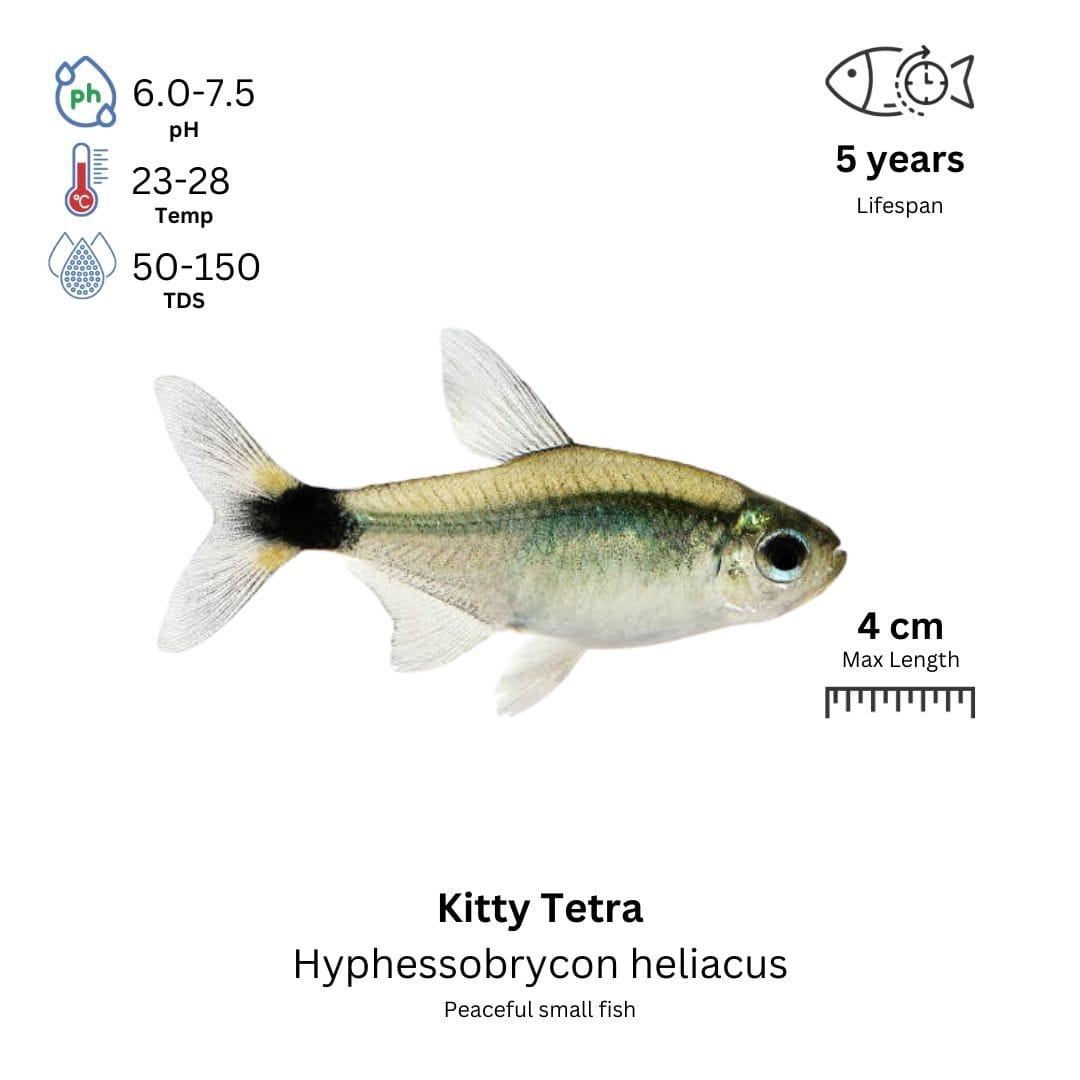
Kitty Tetra: Fish Species Profile
The Kitty Tetra (Hyphessobrycon herbertaxelrodi) is a peaceful and striking species of freshwater fish, known for its distinctive appearance and vibrant colors. Named after the soft, cat-like markings on its body, the Kitty Tetra is a popular species among aquarists for its adaptability and its striking black markings, which resemble a “cat’s whiskers.” Its social nature and beautiful coloration make it a great addition to community aquariums.
- Common Names: Kitty Tetra, Axelrod’s Tetra
- Scientific Name: Hyphessobrycon herbertaxelrodi
- Adult Size: Typically 1.5 to 2 inches (4 to 5 cm) in length
- Life Expectancy: 3 to 5 years in a well-maintained tank
Characteristics
The Kitty Tetra has a slender, elongated body with vibrant coloration that can range from silvery to golden, and it is adorned with black markings resembling the whiskers of a cat along its head and body. The black markings on its head and sides are the fish’s most distinctive feature. Males tend to be smaller and more colorful, especially during breeding, while females are slightly larger and rounder. Kitty Tetras are active, peaceful fish that thrive in schools, making them ideal for community tanks.
- Family: Characidae
- Origin: Native to the rivers and streams of South America, particularly in Brazil and the Rio Orinoco basin
- Social Behavior: Peaceful and social; thrives in schools
- Tank Level: Mid to upper-level swimmers
- Minimum Tank Size: 10 gallons (38 liters) for a small group
- Diet: Omnivorous, feeding on a mix of plant material, small invertebrates, and detritus
- Breeding: Egg layers; lay eggs on plants or flat surfaces
- Care Level: Easy; suitable for beginner aquarists
- Water Conditions:
- pH: 6.5 to 7.5
- Temperature: 72°F to 80°F (22°C to 27°C)
- Hardness: 5 to 15 dGH
Origin and Distribution
The Kitty Tetra is native to the rivers and streams of South America, particularly in Brazil and the Rio Orinoco basin. These fish thrive in slow-moving waters with dense vegetation, where they feed on small invertebrates, algae, and plant matter. Although they are not as widely distributed in the wild, they are commonly bred in captivity for the aquarium trade due to their unique appearance and peaceful nature.
Colors and Markings
The Kitty Tetra is known for its distinctive black markings along its head and body, which resemble the whiskers of a cat. The body of the fish is typically a silvery or golden hue, and the black markings contrast beautifully with its light body color. Males generally have more vibrant coloration, especially during breeding, with brighter and more defined black markings. Females are slightly larger, rounder, and more subdued in color. This species’ unique markings and lively behavior make it a favorite among aquarists.
Tankmates
Kitty Tetras are peaceful and social fish that do well in community aquariums with other small, non-aggressive species. They are best kept in schools of at least 6-8 individuals to encourage natural schooling behavior. They can coexist with other peaceful species, including tetras, rasboras, and livebearers. Larger or more aggressive fish should be avoided, as they may outcompete the Kitty Tetra for food or harass them.
- Recommended Tankmates:
- Small, peaceful fish like neon tetras, ember tetras, or small rasboras
- Small livebearers like guppies, mollies, and platies
- Peaceful bottom-dwelling species like Corydoras catfish or peaceful plecos
- Shrimp species like Cherry Shrimp or Amano Shrimp
- Fish to Avoid:
- Larger or more aggressive species like cichlids, barbs, or predatory fish
- Fast-moving species that may outcompete Kitty Tetras for food
Habitat and Care
The Kitty Tetra is an easy species to care for and adapts well to a variety of tank setups. They thrive in well-planted aquariums with stable water conditions. These fish prefer soft, slightly acidic to neutral water, and they benefit from moderate filtration. A tank with plenty of hiding spaces, such as caves, driftwood, or plants, will make them feel secure and reduce stress. Regular water changes and consistent water parameters are essential for their health.
- Ideal Aquarium Conditions:
- A well-planted tank with plenty of hiding spots and swimming space
- Soft substrate like sand or fine gravel for easy navigation
- Moderate filtration to maintain clean water
- Regular water changes (at least 25% per week) to ensure water quality
- Stable water temperature and pH levels within the recommended range
Diet and Feeding
The Kitty Tetra is an omnivorous species that will accept a wide variety of foods. In the wild, they feed on small invertebrates, algae, and plant matter. In the aquarium, they can be fed high-quality flake food, sinking pellets, live or frozen foods like brine shrimp, daphnia, and bloodworms, as well as vegetables like spinach and zucchini. Offering a varied diet ensures that the fish receive the nutrients they need to thrive and maintain their vibrant colors.
- Feeding Tips:
- Feed small amounts 2-3 times a day
- Offer a mix of plant-based foods and protein-rich foods
- Remove any uneaten food after 5-10 minutes to avoid water quality issues
- Supplement their diet with live or frozen foods for added nutrition
Gender Differences
Male and female Kitty Tetras are fairly similar in appearance, but males are usually smaller and more brightly colored, particularly during breeding season when their black markings become more pronounced. Females tend to be larger and rounder, particularly when gravid (carrying eggs).
- Male: Smaller, more colorful with brighter black markings during breeding
- Female: Larger, rounder body, less vibrant coloration, especially when gravid
Breeding
Breeding Kitty Tetras in captivity is relatively easy, though it does require some preparation. These fish are egg layers, and the female typically lays her eggs on plants or flat surfaces. After fertilization, the eggs will hatch in 2-3 days, and the fry will be free-swimming in about a week. The fry can be fed infusoria or finely crushed flakes until they are large enough to eat regular food.
- Breeding Tips:
- Provide a separate breeding tank with plenty of plants or breeding mats for egg laying
- Maintain stable water conditions with slightly acidic to neutral pH and moderate temperature
- After hatching, move the fry to a separate tank or use a breeding net to protect them from adult fish
More Pet Fish Species and Further Research
If you enjoy keeping Kitty Tetras, you may want to explore other peaceful tetra species such as Neon Tetras, Ember Tetras, or other types of Rasboras. Additionally, small livebearers like guppies, mollies, or platies, as well as peaceful bottom-dwellers like Corydoras catfish, make great companions in a tank with Kitty Tetras.
FAQ
Q: How many Kitty Tetras should I keep together?
A: It’s best to keep at least 6-8 Kitty Tetras together to allow them to exhibit natural schooling behavior and reduce stress.
Q: Are Kitty Tetras hard to care for?
A: No, they are relatively easy to care for and are suitable for beginner aquarists. They thrive in well-maintained tanks with stable water conditions.
Q: How can I tell if my Kitty Tetra is male or female?
A: Males are typically smaller, more colorful, and have brighter black markings during breeding. Females are larger, rounder, and less vibrant in color.
Reviews
There are no reviews yet.