
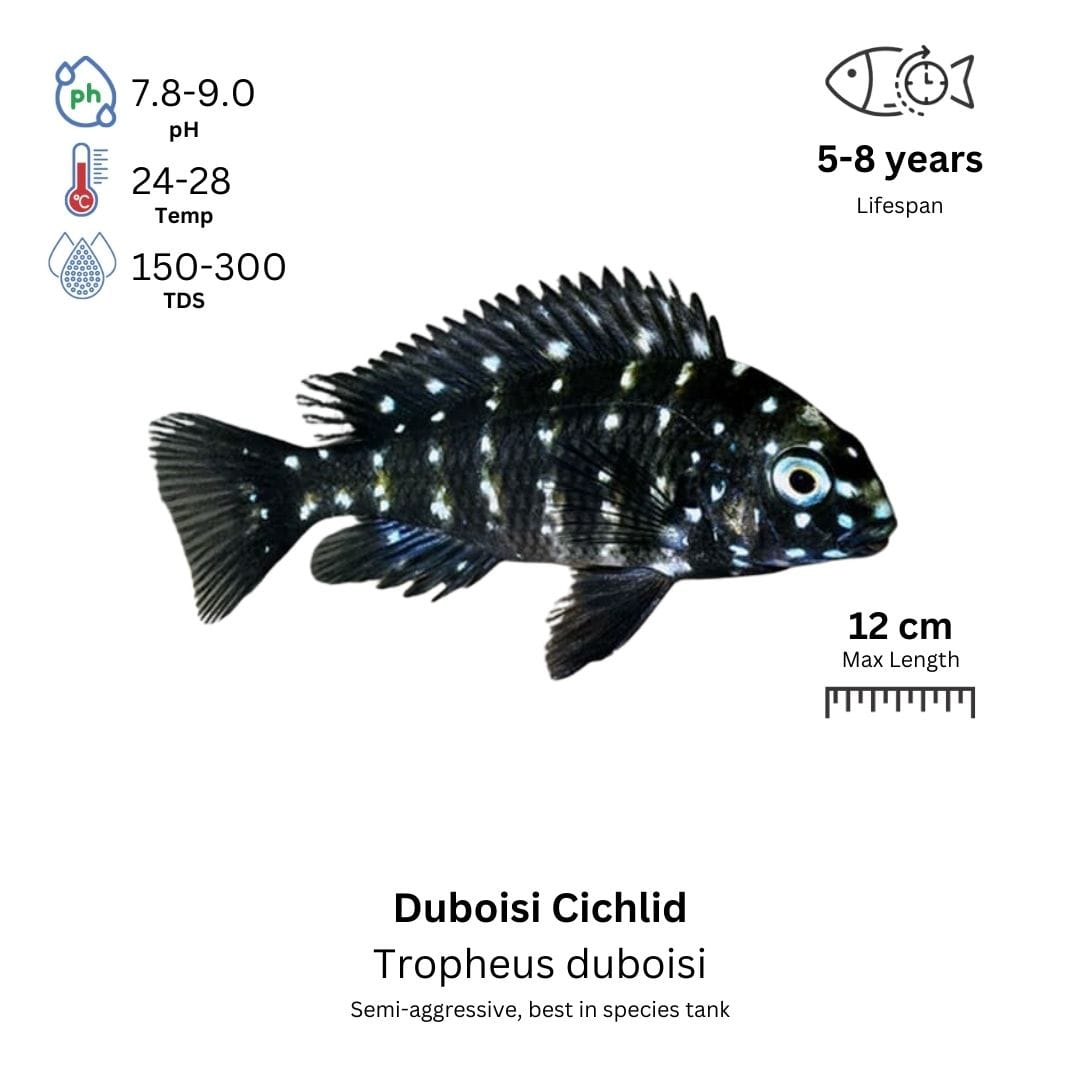
Duboisi Cichlid: The Striking African Cichlid with a Unique Color Transformation
Characteristics
The Duboisi Cichlid (Tropheus duboisi) is a fascinating species from Lake Tanganyika, known for its dramatic color transformation as it matures. Juveniles display bright yellow or white spots on a black body, while adults develop a dark blue-black body with a vibrant blue head. This species is a high-energy, territorial fish, requiring specific care conditions but offering a visually stunning reward for dedicated aquarists.
- Scientific Name: Tropheus duboisi
- Common Names: Duboisi Cichlid, White Spotted Cichlid
- Natural Habitat: Rocky shorelines of Lake Tanganyika, East Africa
- Behavior: Aggressive, territorial, but highly social in groups
- Tank Size: Minimum 75 gallons for a small colony; 125+ gallons for larger groups
- Ideal Water Parameters:
- pH: 8.0 – 9.0 (alkaline water)
- Hardness: 10 – 15 dGH
- Temperature: 74 – 82°F (23 – 28°C)
- Care Level: Moderate to Advanced
Origin and Distribution
The Duboisi Cichlid is endemic to Lake Tanganyika, where it inhabits rocky, algae-rich shorelines. This environment provides plenty of hiding spaces and natural grazing surfaces for their herbivorous diet. Unlike some other cichlids, they live in highly structured social groups, making colony-based setups essential for their well-being.
Colors and Markings
One of the most distinctive features of the Duboisi Cichlid is its color transformation:
- Juveniles: Black body covered in bright white or yellow spots.
- Adults: Dark blue or black body with a brilliant blue face and faded spots.
This dramatic shift in coloration makes them one of the most unique African cichlids available in the hobby.
Tankmates
Duboisi Cichlids are territorial and aggressive, particularly toward their own species. However, they thrive in groups of 10+ individuals to minimize aggression. Ideal tankmates include:
- Other Tanganyikan Cichlids (Tropheus species, Frontosa, Julidochromis)
- Synodontis Catfish (for bottom-dwelling tank balance)
- Cyprichromis species (non-aggressive open-water swimmers)
- Plecos or other algae eaters (to help maintain cleanliness)
Avoid keeping them with:
- Mbuna Cichlids (from Lake Malawi, different dietary needs)
- Highly aggressive predators (such as large Haplochromis)
Care Requirements
Because of their active and social nature, Duboisi Cichlids need:
- A large tank with rock structures to mimic their natural environment.
- Strong filtration, as they produce a high bioload.
- A sand or fine gravel substrate, which is ideal for digging and natural behaviors.
- High oxygenation, using air stones or strong water flow.
Perform weekly 20-30% water changes to maintain water clarity and keep parameters stable.
Diet and Feeding
Duboisi Cichlids are herbivores, meaning they require a vegetation-rich diet to prevent digestive issues like bloat. Their diet should include:
- High-quality spirulina flakes or pellets
- Blanched vegetables (zucchini, spinach, cucumber)
- Occasional protein-based treats (daphnia, krill) – but avoid too much animal protein!
Avoid feeding high-protein foods like bloodworms, as these can cause serious digestive problems in herbivorous cichlids.
Gender Differences
Males and females look very similar, but males tend to:
- Be slightly larger with more elongated fins.
- Show more intense coloration during dominance displays.
The best way to ensure a breeding pair is to start with a group and let them pair off naturally.
Breeding
Duboisi Cichlids are maternal mouthbrooders, meaning the female carries fertilized eggs in her mouth until they hatch.
Breeding Steps:
- Set up a colony with more females than males (ideal ratio: 1 male to 3-4 females).
- Males establish a territory and will display to females for mating.
- Females lay eggs on a flat surface, then collect them in their mouth.
- Males fertilize the eggs, and the female incubates them for about 3-4 weeks.
- Once released, fry can eat crushed spirulina flakes and baby brine shrimp.
The fry grow slowly, but with good nutrition and stable water conditions, they will develop into healthy juveniles.
Additional Resources
For more information on Tropheus cichlids and their care, explore:
- How to Maintain a Tanganyikan Cichlid Aquarium
- Feeding Strategies for Herbivorous Cichlids
- Tropheus Duboisi Breeding Success Guide
The Duboisi Cichlid is an incredibly unique and rewarding species, perfect for aquarists who enjoy African cichlids and are willing to meet their social and dietary needs. With their vibrant colors, colony behavior, and interesting breeding habits, they are a fantastic choice for any dedicated fish keeper!
Reviews
There are no reviews yet.