
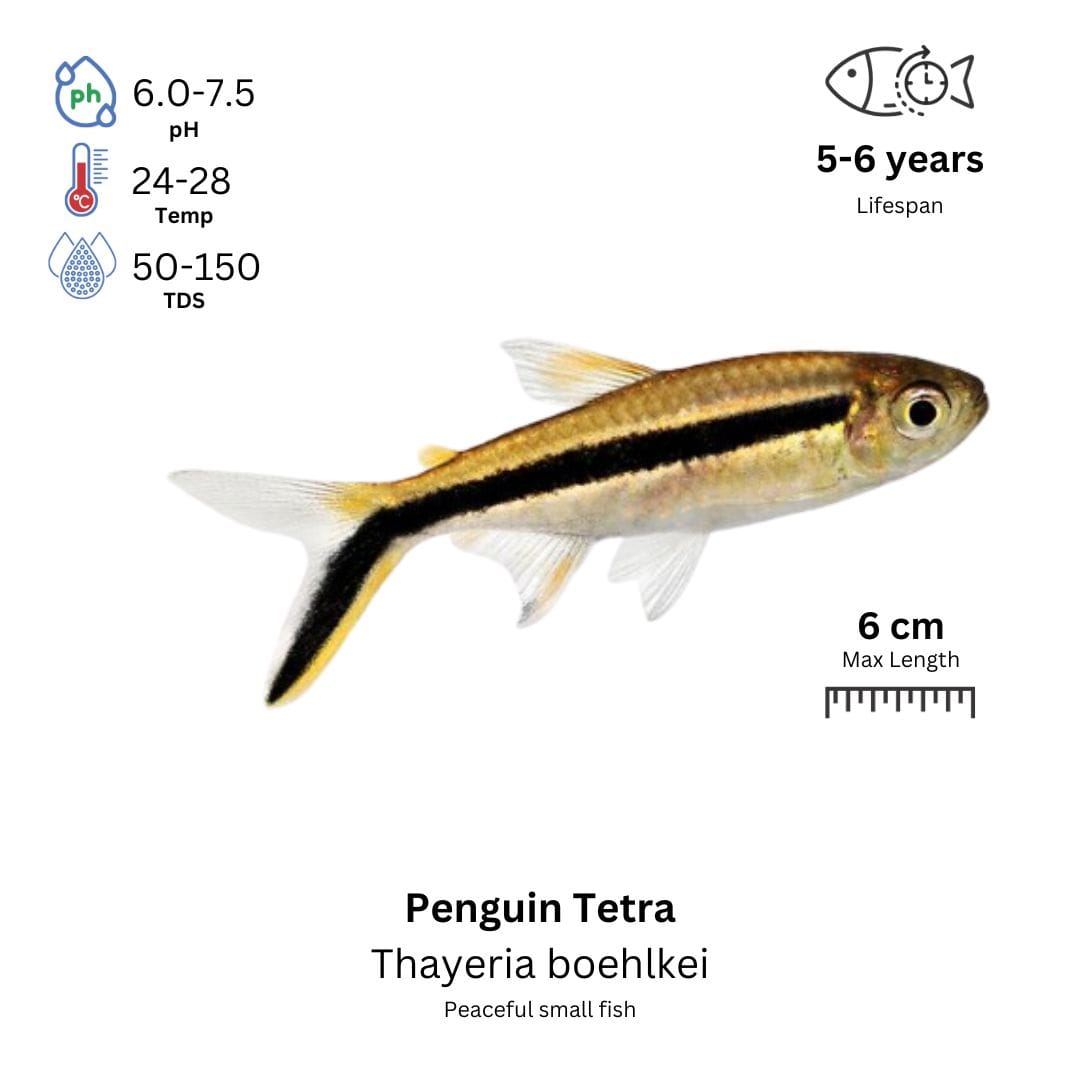
Penguin Tetra (Thayeria boehlkei): Species Profile
The Penguin Tetra, scientifically known as Thayeria boehlkei, is a distinctive freshwater fish celebrated for its unique swimming posture and striking appearance. Originating from the Amazon River basin in South America, this species is a popular choice among aquarists due to its peaceful nature and adaptability.
Species Overview
- Common Names: Penguin Tetra, Blackline Penguin Fish, Hockey Stick Tetra
- Scientific Name: Thayeria boehlkei
- Adult Size: Approximately 2.5 inches (6 cm)
- Life Expectancy: 3 to 5 years
Characteristics
- Family: Characidae
- Origin: Amazon River basin, South America
- Social: Peaceful, schooling
- Tank Level: Mid to upper regions
- Minimum Tank Size: 20 gallons
- Diet: Omnivore
- Breeding: Egg scatterer; moderately challenging in captivity
- Care Level: Beginner
- pH: 6.0 to 8.0
- Hardness: 4 to 18 dGH
- Temperature: 72–82°F (22–28°C)
Origin and Distribution
Penguin Tetras are native to the Amazon River basin in South America, inhabiting small streams and river margins rich in vegetation. They thrive in slow-moving waters with dense plant life, providing ample hiding spots and feeding grounds.
Colors and Markings
This species features a silver body adorned with a distinctive black stripe running laterally from behind the eye to the lower lobe of the caudal fin. Their unique swimming posture, where they tilt slightly head-up, adds to their distinctive appearance.
Tankmates
Penguin Tetras are peaceful and do well in community tanks with other non-aggressive species. Suitable tankmates include:
- Other small tetras
- Rasboras
- Corydoras catfish
- Dwarf gouramis
- Livebearers like guppies and platies
It’s advisable to avoid housing them with larger, aggressive fish or fin-nippers that might harass them.
Habitat and Care
To replicate their natural habitat:
- Tank Setup: Provide a well-planted aquarium with open swimming areas. Incorporate fine-leaved plants, driftwood, and rocks to offer hiding spots and mimic their natural environment.
- Water Parameters: Maintain stable water conditions within the recommended pH and hardness ranges. Regular water changes are essential to keep the environment clean and healthy.
- Lighting: Moderate lighting is preferred, which can be achieved with floating plants to diffuse light.
Diet and Feeding
Penguin Tetras are omnivorous and thrive on a varied diet:
- High-quality flake or micro-pellet food
- Live or frozen foods such as brine shrimp, daphnia, and bloodworms
- Occasional vegetable matter like blanched spinach or zucchini
Feed them small portions multiple times daily, ensuring they consume the food within a few minutes to prevent overfeeding and maintain water quality.
Gender Differences
Males are generally more colorful with a slimmer body, while females have a rounder abdomen, especially when carrying eggs.
Breeding
Breeding Penguin Tetras in captivity is moderately challenging:
- Breeding Tank: Set up a separate tank with fine-leaved plants or spawning mops. Maintain slightly acidic to neutral water with a temperature around 78°F (26°C).
- Spawning: Introduce a conditioned male and female pair. Spawning typically occurs in the early morning, with the female scattering eggs that the male fertilizes.
- Raising Fry: After spawning, remove the adults to prevent them from eating the eggs. Eggs hatch within 24–36 hours, and fry can be fed infusoria or commercially prepared fry food until they are large enough to accept standard foods.
Further Research
For those interested in similar species, consider exploring:
- Blackline Penguin Fish (Thayeria boehlkei)
- Hockey Stick Tetra (Thayeria obliqua)
- Black Phantom Tetra (Hyphessobrycon megalopterus)
These species share comparable care requirements and can coexist harmoniously in a community aquarium.
FAQ
- How many Penguin Tetras should be kept together? It’s best to keep them in groups of at least six to promote natural schooling behavior and reduce stress.
- Are Penguin Tetras suitable for beginners? Yes, their hardy nature and ease of care make them excellent choices for novice aquarists.
- Can Penguin Tetras live with other fish? Yes, they can coexist with other peaceful, similarly sized fish. However, avoid housing them with larger or aggressive species to prevent potential conflicts.
By providing appropriate care and a suitable environment, Penguin Tetras can be a lively and colorful addition to any freshwater aquarium.
Reviews
There are no reviews yet.