
Kohaku Swordtail
Xiphophorus hellerii
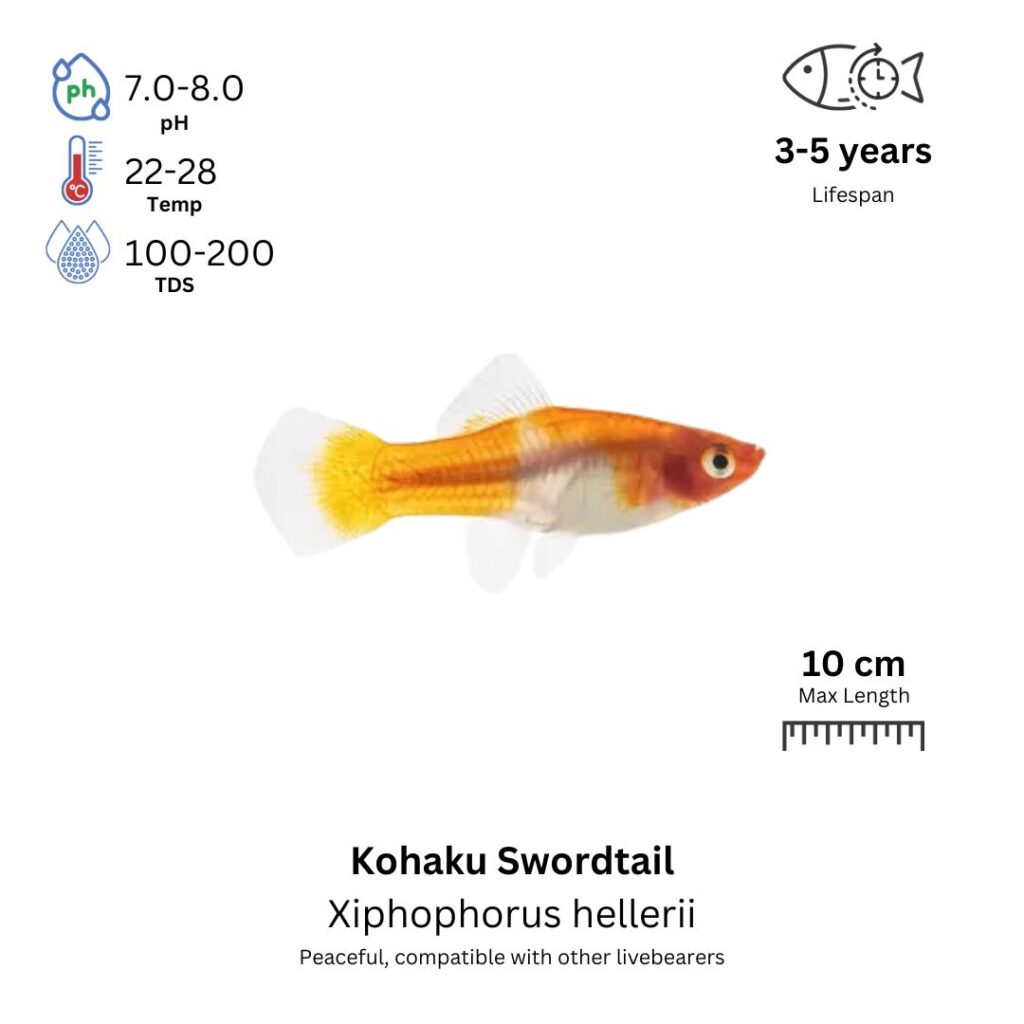
Description
The Kohaku Swordtail is a vibrant and stunning variant of the Swordtail fish, known for its striking coloration and elegant shape. This variety is a popular ornamental fish in aquariums due to its bright, vivid colors. The body of the Kohaku Swordtail is typically a golden or yellowish-orange hue, with some individuals displaying red or fiery tones, especially around the tail and dorsal fins. The males have an extended, sword-like tail fin, a characteristic of the species, which adds to their graceful appearance.
Habitat Origin
Native to Central America, particularly from southern Mexico to Honduras. They inhabit slow-moving rivers, streams, and lakes with abundant vegetation and submerged structures. Swordtails are commonly found in clear to slightly murky waters with neutral to slightly alkaline water conditions. They prefer environments that are well-oxygenated with moderate water flow and plenty of plant cover for hiding.
Aquarium
Ideal Number in Aquarium: At least 6 individuals, as they are schooling fish and feel more secure in groups.
Favorite Food

Kohaku Swordtails are omnivores and will accept a wide variety of foods. They can be fed high-quality flake food, micro pellets, and live or frozen foods such as brine shrimp, bloodworms, daphnia, and grindal worms. They will also graze on plant matter, so supplementing their diet with algae-based foods like spirulina or blanched vegetables such as spinach and zucchini is beneficial. A varied diet ensures they stay healthy and vibrant.
Behavior:
Kohaku Swordtails are peaceful, active, and social fish. They are best kept in schools, as they feel more secure and display natural behavior when in groups. These fish are generally non-aggressive but can exhibit mild territorial behavior, especially during mating or when defending their space. Males often display their extended swordtail fins to attract females, especially during the breeding season. They are also quite curious and will often explore their surroundings, making them fun to watch. They get along well with other peaceful fish species, but it is best to avoid keeping them with overly aggressive or large fish.
Special Care:
While Kohaku Swordtails are hardy and easy to care for, they do best in tanks with stable water conditions. Regular water changes, good filtration, and a well-maintained tank are important for their health. Providing plenty of hiding spots, such as plants or decorations, helps reduce stress, especially for females, which may need retreat areas. Swordtails are livebearers, so if breeding is not desired, it is important to manage the male-to-female ratio or separate the sexes. Also, provide a varied diet to support their health and vibrant coloration.
Compatibility with Other Fish:
Kohaku Swordtails are compatible with many other peaceful species. They can be housed with other small to medium-sized fish like tetras, rasboras, guppies, and corydoras catfish. They are peaceful and can also coexist with other livebearers. However, they should not be kept with large, aggressive species, as these may intimidate or harm them. Swordtails are best housed with other non-aggressive, peaceful fish that have similar water requirements.
Breeding Tank Setup
While a separate breeding tank is not strictly required for Kohaku Swordtails, it is highly recommended to ensure stable water conditions and reduce disturbances during the breeding process. A tank of 40–60 liters (10–15 gallons) provides ample space for swimming, mating, and fry development. Ideal water parameters include a pH of 7.0–8.0, temperature between 24–28°C, and soft to moderate hardness (6–12 dGH). A gentle sponge or low-flow internal filter helps maintain water quality without harming delicate fry. Use fine gravel or sand substrate, and add live plants such as Java moss, Hornwort, or floating plants to offer hiding spaces and spawning comfort.
Selecting Breeders & Conditioning
Condition Kohaku Swordtails with a varied and protein-rich diet to enhance fertility and breeding behavior. Suitable foods include live or frozen brine shrimp, daphnia, bloodworms, and high-quality pellets or flakes for livebearers. Well-fed females will develop eggs more effectively, and males will become more active in courtship. Conduct 20–30% partial water changes weekly and consider raising the water temperature slightly to 28°C to simulate optimal breeding conditions and encourage spawning readiness.
Spawning Process
Swordtails are livebearers, meaning fertilization happens internally, and the fry are born fully developed. Mating usually occurs in the early morning or late evening, marked by the male’s chasing behavior and display of his signature tail “sword.” After successful mating, the female can give birth to 20–100 fry per cycle, usually every 3–4 weeks. It is advisable to remove the male after fertilization to reduce stress and prevent excessive pursuit of the female during pregnancy.
Maturity, Sexing, and Stress Prevention
Kohaku Swordtails reach sexual maturity at 3–4 months, although it’s best to allow full physical development before initiating breeding. Males are smaller, more vibrant, and feature a distinct sword-like extension on their tails, while females are larger, rounder, and less colorful, especially when gravid. To reduce stress, avoid overcrowding and maintain consistent water parameters. Remove aggressive or incompatible tankmates to preserve a peaceful breeding environment and ensure successful reproduction.